
Buy-to-Let Investment in the North East of England: The 2026 Guide
By Talking Houses ·
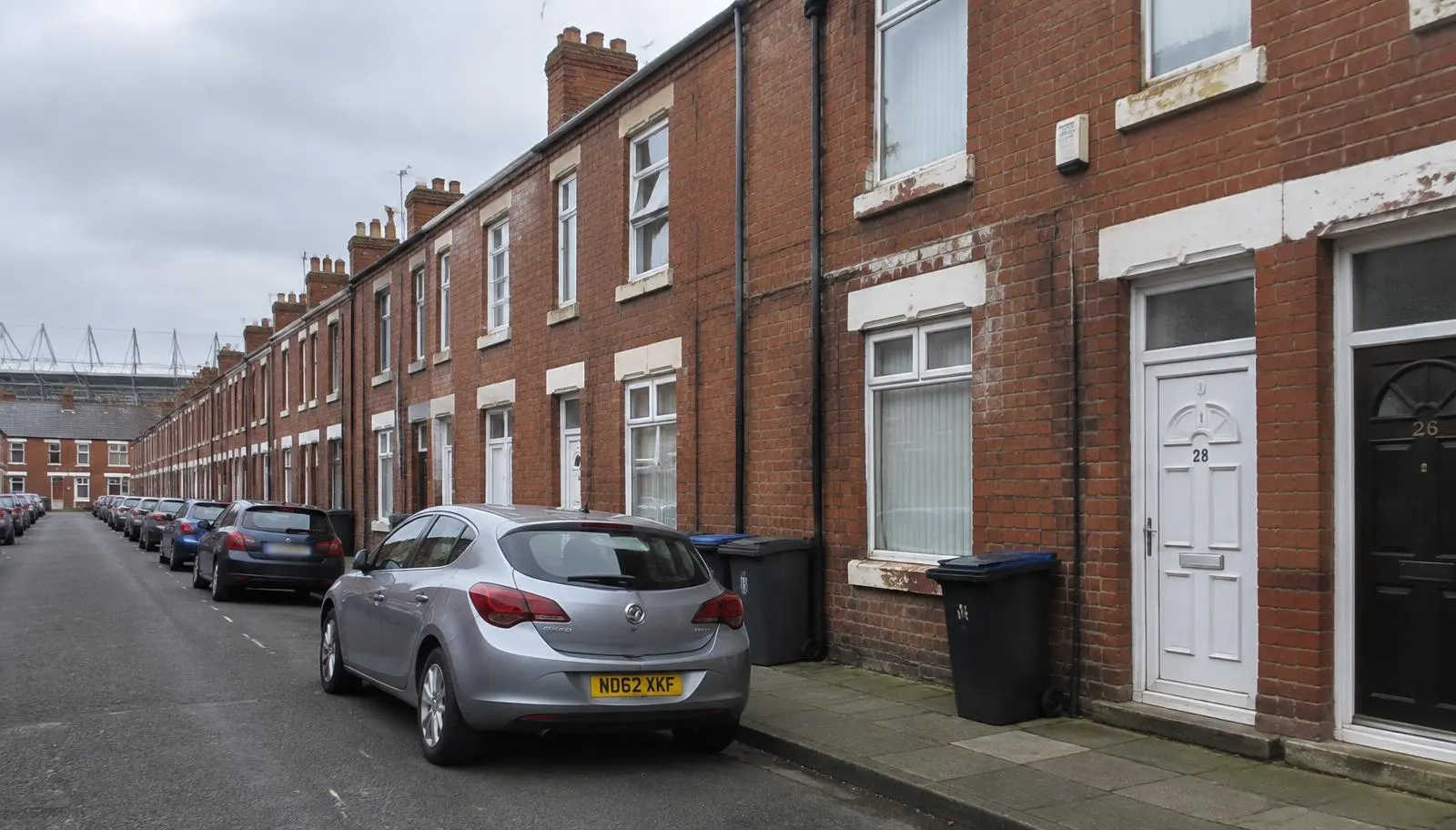
Most buy-to-let advice written about the North East still leads with "affordable house prices." That's true, but it's also the least interesting reason to invest here. The number that actually matters is yield, and on that measure the North East isn't just cheap — it's the best-performing region in England.
Zoopla's most recent regional data (published March 2026, based on transactions to September 2025) puts the North East's average gross rental yield at 7.9%. The UK average is 5.8%. That's not a marginal gap — it's the difference between a property that cashflows comfortably from day one and one that needs rent to climb for years before it does.
This guide covers where that yield is coming from, which towns are worth a closer look, and what actually trips landlords up once they own something here.
Why the yields are what they are
Rental yield is just rent divided by price, so a high yield means one of two things: rents are unusually strong, or prices are unusually low relative to what tenants will pay. In the North East, it's mostly the second one — and that's the more durable of the two reasons.
Average property values across the region sit around £114,000, against a UK average of roughly £290,000. Average monthly rent, meanwhile, is £748 — not dramatically lower than plenty of more expensive parts of the country. Buy a property for a third of the national average price and let it for something closer to the national average rent, and the maths does the rest.
The other driver is genuine, structural demand. Nissan's EV36Zero programme alone represents up to £2 billion of investment centred on Sunderland, protecting around 7,000 direct jobs and an estimated 30,000 more across the supply chain. Riverside Sunderland is bringing roughly 1,000 new homes to the city centre with over £29 million of Homes England funding behind it. None of that shows up instantly in a yield figure, but it's the reason tenant demand in these towns isn't a temporary blip.
Where the numbers actually stack up
Not every North East town performs the same, and the regional average hides some real variation worth knowing before you pick an area.
| Town | Gross yield | Avg. monthly rent | Avg. property price |
|---|---|---|---|
| Sunderland | 9.3% | £659 | £84,924 (BTL avg.) |
| Middlesbrough | 8.1% | £665 | £98,697 (BTL avg.) |
| County Durham | 8.0% | £623 | £140,000 (all stock) |
| Darlington | 7.8% | £670 | £159,027 (all stock) |
| Newcastle | 7.7% | £895 | £140,184 (BTL avg.) |
Sources: Sunderland, Middlesbrough, Newcastle and regional yield figures from Zoopla (data to September 2025, published March 2026) — "BTL avg." is Zoopla's own filtered average price for typically-let property types, which is why it sits well below the town's overall average sold price. County Durham rent and price from nguhomes.co.uk (January 2026); Darlington rent from Rightmove-sourced data (November 2024) and price from Zoopla sold-price data (12 months to 2026) — these two are more general "all property types" averages rather than a BTL-specific figure, so treat them as a guide to the area rather than a like-for-like comparison with the Zoopla BTL figures above.
Sunderland currently tops the list, and it's not close. Postcodes like SR1 have shown gross yields as high as 12% on the cheapest stock, and even the pricier SR4 area still clears 6.2%. Average sold prices across the city sit at £145,546 (HM Land Registry, March 2026) — but that figure includes plenty of property well above what a typical BTL purchase looks like, which is why the £84,924 average BTL price is the more useful number for investors. Prices here have climbed 22% over the past five years, so this isn't just a cheap-and-cheerful yield play; there's capital growth alongside it.
Middlesbrough has had a moment in the spotlight — Zoopla has previously ranked it England's number one hotspot for rental yields outright, and the 8.1% current figure keeps it near the top of this list. It's the classic low-price, low-rent-in-absolute-terms-but-high-relative-yield market: a £665 monthly rent doesn't sound remarkable until you see it against a £98,697 purchase price.
Newcastle is the odd one out here — it has the lowest yield of the group, but the highest rent in cash terms and the most established tenant base, particularly around the universities and the professional lettings market. It's a different kind of buy-to-let: less about squeezing out yield, more about a market with deeper long-term demand and easier resale.
County Durham and Darlington don't get talked about as much, but they're both sitting at yields North East itself would have considered exceptional five years ago. County Durham in particular is where a lot of the smaller-town opportunity is — Bishop Auckland, Ferryhill, Shildon and the rest of the county's ex-mining towns, where prices are lower again than the regional average. We've covered Bishop Auckland specifically in a separate guide, since it deserves its own numbers rather than a paragraph here.
Want to see what a 9% yield actually looks like on a real property?
We'll walk you through a live or recent deal on a free 15-minute call — no pressure, just the numbers.
Book your free call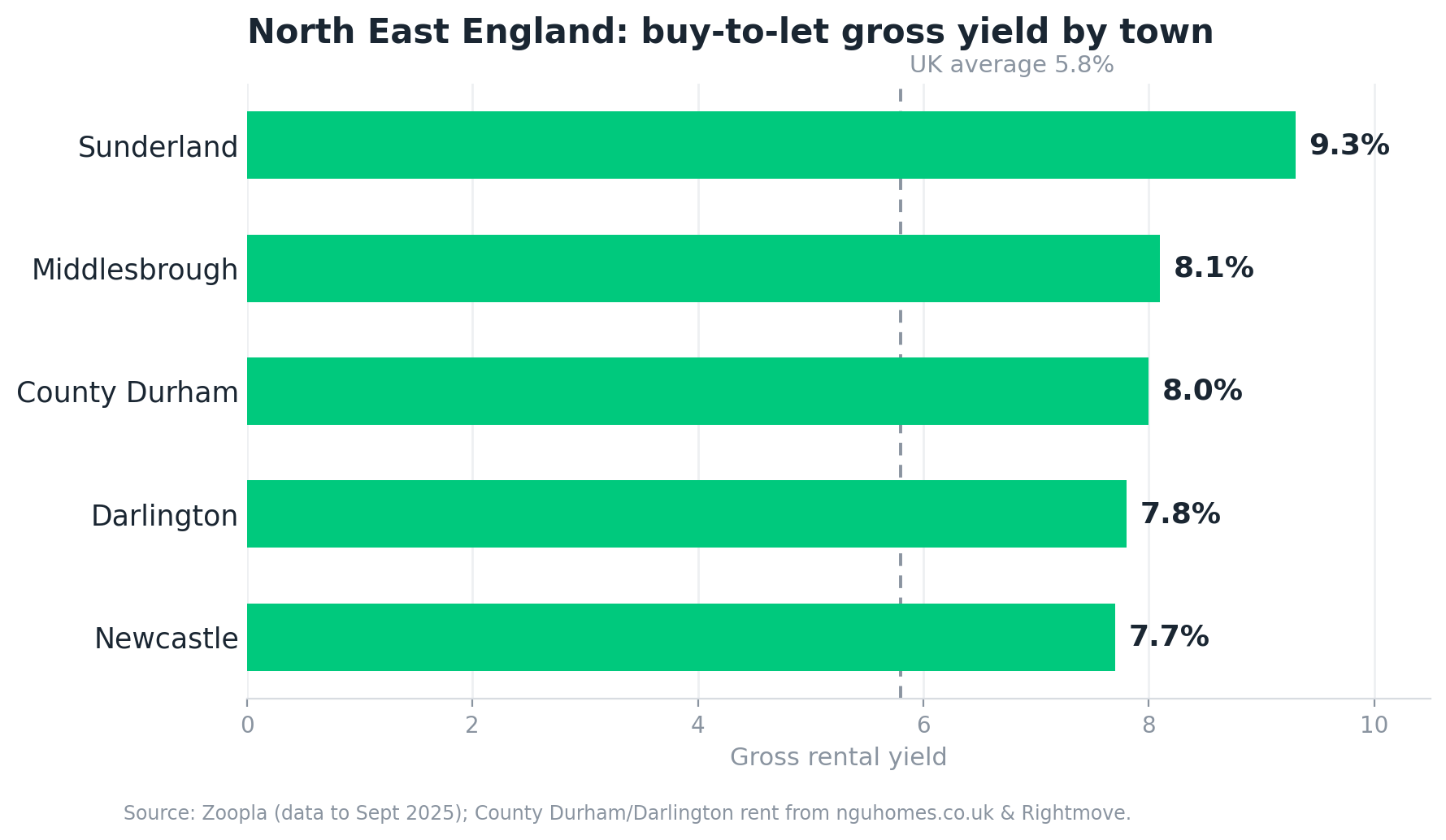 Gross rental yield by town, North East England. Source: Zoopla, data to September 2025.
What catches landlords out
None of this is worth much if the practical side goes wrong, and there's one thing in particular that trips up investors who are used to buying elsewhere in the country: selective licensing.
Middlesbrough and Stockton-on-Tees both run selective licensing schemes covering large parts of their private rented stock. If a property falls inside a designated area, letting it without a licence isn't a technicality — it's an offence, and it can affect your ability to serve a valid Section 21 notice later. Before buying anything in either town, it's worth checking the council's own licensing map for that specific street, not just the town in general, because coverage tends to be patchy rather than borough-wide.
The other thing worth flagging honestly: a chunk of the North East's yield advantage comes from ex-council and older terraced stock that needs work before it's fit to let — new boiler, rewire, damp treatment, sometimes a full refurbishment. That's not a reason to avoid the region. It's the reason the yields exist at all; a property that needs no work rarely trades at a price that produces an 8-9% yield. It is a reason to budget refurbishment properly and have someone locally who can manage that process, rather than assuming a property photographed at £45,000 is ready to let at £45,000 plus a lick of paint.
Before/after refurbishment photo — to be added.
The hands-off route
Everything above assumes you're doing the legwork yourself — finding the deal, managing the refurbishment, vetting a letting agent, chasing a mortgage broker who understands bridging-to-term refinances. That's a viable way to invest here, and plenty of people do it well.
It's also, realistically, most of the reason people who could benefit from North East yields never actually buy here. Sourcing a genuine below-market deal from 200 miles away, managing a refurbishment you can't visit, and getting comfortable with a town you've never lived in is a lot to take on alongside a full-time job.
That's the gap our Bespoke Service is built around: we source the property, manage the refurbishment, get it tenanted, and handle the refinance, so the deal you end up owning is the finished, cashflowing version of everything above rather than a project.
Thinking about investing in the North East?
Tell us your budget and what you're looking for, and we'll tell you honestly whether it's realistic — free 15-minute call, no obligation.
Book your free 15-minute callNext in this series: a closer look at Bishop Auckland and County Durham, what the BRRR strategy actually involves step by step, and how a fully managed sourcing service works in practice.